
Tara Craighead interviewed our 2025 Program Co-Chairs, Drs. Lauren Ehrlich and Sara Lowmaster! Read their interviews or watch the video. Jump to a section. by clicking a link below.
Dr. Lauren E. Ehrlich, Ph.D.
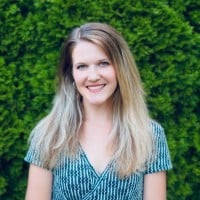
Please provide an overview of your work (e.g., clinical specialty and interests, research program, etc.).
I am a clinical health psychologist specializing in issues related to weight and eating. My current responsibilities are primarily clinical. I work extensively with patients before and after bariatric surgery, focusing on their eating patterns, health behaviors, and adjustment after surgery. I also spend one day a week in our Cancer Center and run programs to treat insomnia and other sleep-related problems.
Where did you complete your training (graduate school and area of emphasis, internship, post doc,
etc.)?
I completed my undergraduate degree at the University of Notre Dame (Go Irish!). Then I went to the University at Albany, SUNY for graduate school, completing their clinical psychology PhD program in 2019. I did my internship year at Geisinger Medical Center, which is where I confirmed that I wanted to build a career in academic medicine. My clinical postdoctoral fellowship was at UVA Health, which is where I currently work.
What is your current position/occupation?
I am an Assistant Professor at the University of Virginia School of Medicine. I am clinical faculty, meaning most of my responsibilities involve patient care, but I also teach and supervise learners, including psychology graduate students, postdoctoral psychology fellows, and medical residents and fellows. Additionally, I dedicate some time to scholarly work, primarily in quality improvement projects. I am usually involved in at least one or two research projects at any given time, many of which are collaborations with other psychologists or providers in other departments.
Can you describe the ways that your career has taken shape over time? How did you get to where you are today?
In graduate school I gained a strong foundation in clinical skills – particularly cognitive behavioral treatments – and discovered a love for patient care. Although my graduate program was very research-oriented, I found my clinical work to be the most interesting and fulfilling. The focus of my graduate lab and some of my graduate clinical training was in disordered eating, but during my internship year I built on this background and began tailoring it toward clinical health psychology and integrated care. I further developed this interest and those skills during my postdoctoral fellowship years. Along the way I had the benefit of outstanding mentorship from faculty, clinical supervisors, and peers. I’ve been fortunate to have great mentors who have modeled fulfilling and productive careers in clinical psychology and helped me shape what I want that to look like for myself.
How long have you been a member of SCP? Please indicate any past or present roles in SCP (e.g.,
leadership, committees, task forces, etc.)?
I had a hard time pinpointing when I first joined SCP, but I believe it was some time in graduate school – so over 10 years ago now. During internship and beyond I became much more involved in Division 38 (Society for Health Psychology) for several years, however I re-joined again when I started my first faculty position in 2021. During my first year I served as a reviewer for the APA Convention and for the past 2 years I have taken on the role of Program Co-Chair for the APA Convention.
Please describe any roles you have with APA or other national, state, or local organizations.
Right now, my primarily leadership roles (other than SCP) are with APAHC – the Association for Psychologists in Academic Health Centers. I am on their board, serving as the Social Media Committee Chair and I’m also the editor of the quarterly newsletter, Grand Rounds. This year my service roles have taken a back seat as my partner and I welcomed a new baby in early May!
What do you see as an important direction for the field of Psychology?
There are so many important directions, it’s impossible to pick just one.
In my own day-to-day work, I see a huge need for improving integrative care and deepening our understanding of the mind-body connection. Psychology will continue to play a vital role in improving our understanding of the ways our minds and bodies are intertwined, and helping patients (and the providers who treat them) better understand and manage their whole health.
Equally important is the ongoing work of improving access and equity in mental health services. Including developing more culturally responsive interventions and re-thinking our models of care to meet a high (and ever-growing) demand for the work that we do. I’m excited to see how the field continues to advance to meet these goals.
Please answer any of the following questions you feel comfortable sharing with SCP membership (it is
fine to skip questions):
What are your hobbies? I love running, particularly training for races. At one point I had a goal to run a race in every single U.S. state. I’ve been moving a little slowly with this goal since having kids, but I’d still love to try. I also love music, especially live music. My partner and I enjoy traveling to see shows. Otherwise, you can typically find me outside. I have a vegetable garden this year, so that has taken a lot of my time, and I love hiking and spending time outside with my family!
What led to your interest in clinical psychology and/or area of interest? In high school I took an AP Psychology class, which was my first exposure to psych and it sparked enough of an interest that I considered majoring in Psychology when I started college. I started as an English/Journalism major, but found myself in a psychology class with a fantastic professor who became a mentor of mine. I assisted in her research lab – the Social Cognition Lab – which did work at the intersection of clinical and social psychology. One of my first research posters was on the impacts of weight-related conversations between women, colloquially called “fat talk.” These experiences solidified my interest in clinical psychology, and in particular, people’s relationships with food and their own bodies and how to help heal those relationships.
What are some challenges you have faced as a professional psychologist? One of the biggest challenges I face right now is trying to maintain a patient-centered approach while working in our current healthcare system, which can sometimes pose limitations to the work we do. We get pulled in so many different directions. And it feels like there is never enough time to do all of the interesting and exciting things our career allows us to do!
Dr. Sara Lowmaster
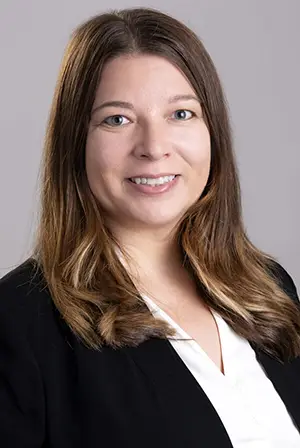
Please provide an overview of your work (e.g., clinical specialty and interests, research program, etc.).
My research focuses on the outcomes of mental health services and the use and development of assessment tools for diagnosis and outcomes monitoring. More specifically, I am interested in transdiagnostic approaches to both diagnosis and evaluation of treatment effectiveness. This work spans a few contexts, including traditional psychiatric treatment settings and recently expanded to evaluate the impact of vicarious trauma among jurors.
In addition to my research, I am the Associate Training Director for the Clinical Psychology Internship in the Department of Psychiatry. My clinical interests are in the areas of psychological assessment and treating individuals with trauma and stress-related disorders. I am grateful to be able to train and supervise interns and residents in these areas.
Where did you complete your training (graduate school and area of emphasis, internship, post doc, etc.)?
I completed my doctoral degree in clinical psychology at Texas A&M University and predoctoral internship at Massachusetts General Hospital/Harvard Medical School. After internship, I was a research psychologist at Boston University/VA Boston Healthcare System where I also completed the clinical requirements for licensure.
What is your current position/occupation?
I am currently an Assistant Professor in the Department of Psychiatry at the University at Buffalo’s Jacobs School of Medicine and Biomedical Sciences.
Can you describe the ways that your career has taken shape over time? How did you get to where you are today?
I have been fortunate to have exceptional research experiences and mentors who encouraged me to pursue a career in clinical psychology. It was during an undergraduate research experience that I first realized I wanted to work in academia. In graduate school, I deepened that commitment by engaging in research, teaching, and mentoring students. My mentor, Les Morey, and the clinical faculty at Texas A&M played an important role in shaping my interest in applied clinical research – an interest I further developed during my internship and postdoctoral training.
These experiences laid the groundwork for my first faculty position in the clinical psychology doctoral program at the University of South Dakota. In many ways, this was the role I envisioned as an undergraduate: I led a research lab focused on assessment, personality, and trauma; I taught courses in these areas; and I contributed to the university’s service mission. During the pandemic, a colleague at the University at Buffalo approached me with an opportunity to lead a new initiative focused on designing and evaluating clinical outcomes in the department. While this faculty role at UB looks different than my position at USD, I am excited to be immersed in clinical research once again. This shift has also broadened the impact of my work and allowed me to integrate my research and teaching in more interdisciplinary and community-connected ways.
How long have you been a member of SCP? Please indicate any past or present roles in SCP (e.g., leadership, committees, task forces, etc.)?
I became a member of SCP in 2016. Serving as program co-chair is my first role within SCP.
Please describe any roles you have with APA or other national, state, or local organizations.
I have served in a few roles for the Assessment Section (Section IX) of Division 12, most recently as membership chair. I also serve on the Continuing Education and Student Matters committees for the Society for Personality Assessment.
What do you see as an important direction for the field of Psychology?
One important direction for the field of clinical psychology is increasing the accessibility and availability of research and research findings. Many research findings remain isolated in journals, limiting their reach and utility. By connecting research to the people and communities it’s intended to serve, we can increase the relevance and impact of our work. Further, with recent cuts to scientific funding and growing public skepticism toward science more broadly, it is critical that psychologists use our skills in communication and advocacy to make research more accessible, inclusive, and relevant to everyday life.
What are your hobbies?
Living in Buffalo has made me appreciate how hobbies shift with the seasons (sometimes out of necessity). In the summer and fall, I enjoy exploring all that Buffalo and Western New York has to offer – from local festivals and live music to hiking in state parks. Year-round, I also enjoy reading, cooking, and staying active.
Watch below for the full interview!