
Book Series: Advances in Psychotherapy — Evidence-Based Practice


Practical, evidence-based guides for everyday practice
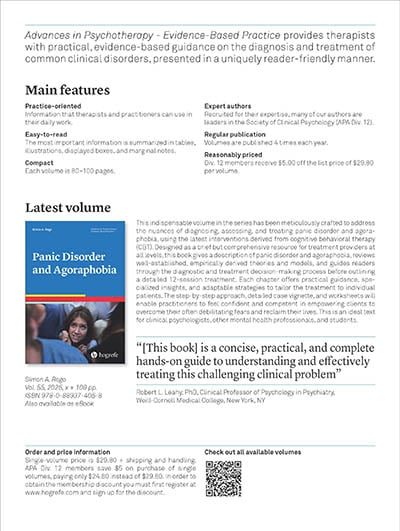
The Advances in Psychotherapy – Evidence-Based Practice series offers therapists practical, evidence-based guidance on diagnosing and treating the most common disorders in clinical practice—presented in a uniquely reader-friendly format.
Each book is:
- A compact how-to reference for clinicians to use in daily practice
- An educational resource for students and for practice-oriented continuing education
A new strand is also being planned, focusing on methods and approaches rather than specific disorders.
Key features include:
- Practical, easy-to-follow structure across all volumes
- Comprehensive coverage of real-life practice needs
- Tables, boxed clinical pearls, and marginal notes for quick orientation
- Checklists and summary boxes that can be copied and used in daily work
The series is developed and edited with the support of the Society of Clinical Psychology (APA Division 12).

Interview with J. Kim Penberthy
J. Kim Penberthy is one of two new editors of the APT book series. In this video, she is talking about her book Persistent Depressive Disorders, the latest volume in the series.
Why this series works for clinicians
Practice-Oriented: Focused on information therapists can use directly in daily practice.
Easy-to-Read: Key points are highlighted in tables, illustrations, boxed content, and marginal notes.
Compact: Each volume is concise, typically 80–100 pages.
Expert Authors: Written by leading authorities, many of whom are leaders in the Society of Clinical Psychology (APA Division 12).
Regular Publication: Four new volumes are published each year.
Reasonably Priced: List price is under $30 per volume, with discounts for APA Division 12 members and subscriptions of four or more volumes.
Content and structure
Volumes on a Disorder or Group of Disorders
Each volume follows a consistent structure to provide a comprehensive guide for clinical practice:
Description
- Terminology
- Definition
- Epidemiology
- Course and Prognosis
- Differential Diagnosis
- Comorbidities
- Diagnostic Procedures and Documentation
- Theories and Models of the Disorder
- Diagnosis and Treatment Indications
Treatment
- Methods of Treatment
- Mechanisms of Action
- Efficacy and Prognosis
- Variations and Combinations of Methods
- Problems in Carrying Out the Treatment
- Multicultural Issues
Additional Features
- Case Vignette
- Further Reading
- References
- Appendix: Tools and Resources
Volumes on Methods and Approaches (New Strand)
This new series strand focuses on treatment methods rather than specific disorders. Each volume is structured as follows:
Description
- Terminology
- Overview
- Theories and Models
- Assessment and Treatment Indications
Treatment
- Method of Treatment
- Efficacy and Prognosis
- Variations of the Method and Combinations with Other Approaches
- Problems in Carrying Out the Treatment
- Multicultural Issues
Additional Features
- Case Vignette
- Further Reading
- References
- Appendix: Tools and Resources
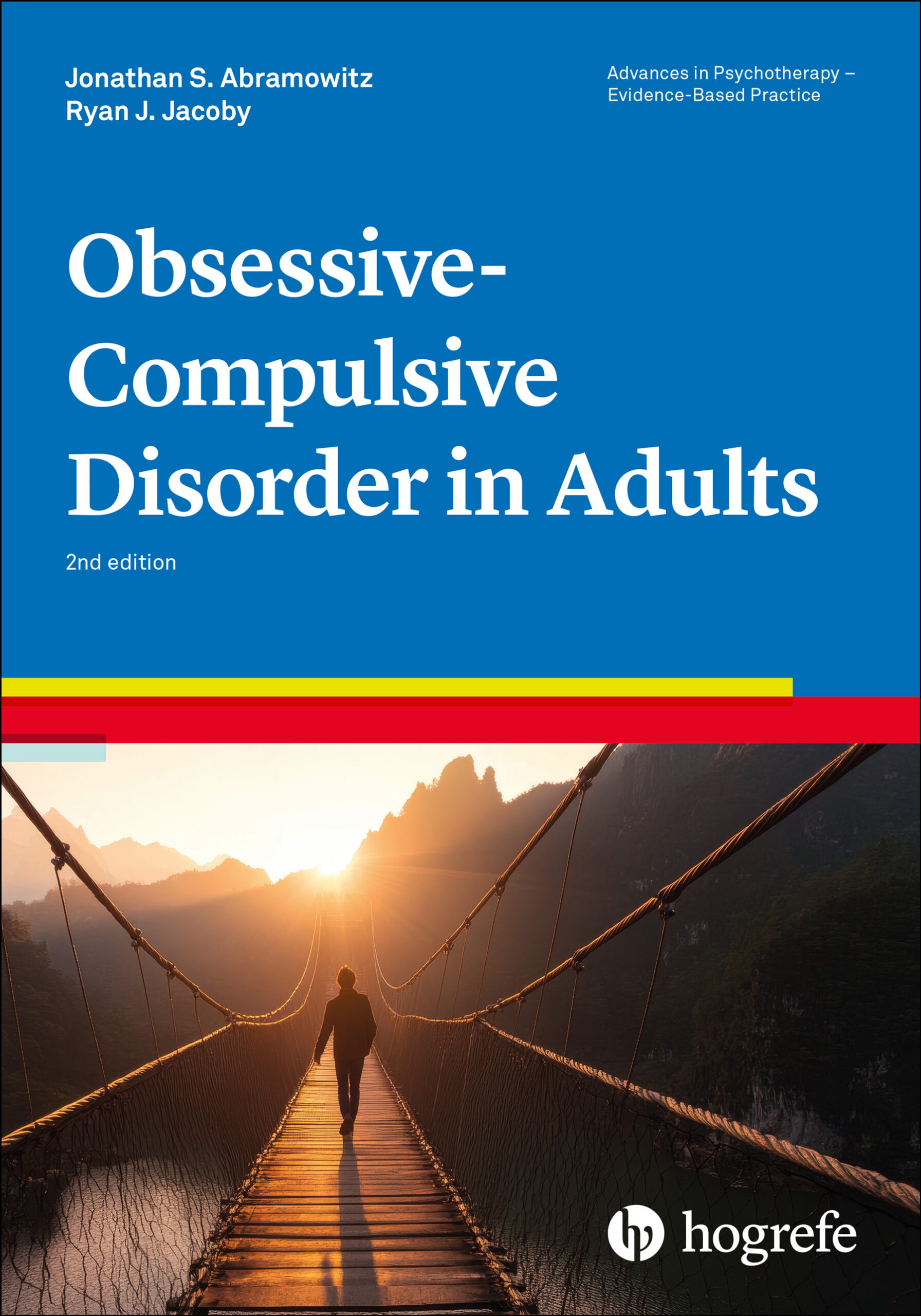
Most recent releases



Get in touch
You have questions, we have answers. How can we help?