
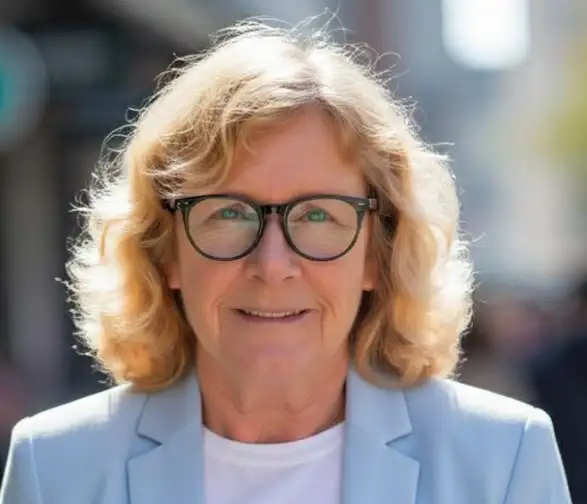
Lynn H. Collins, Ph.D.

I am honored to have been elected the new President of the Society of Clinical Psychology (SCP). SCP was the first division I joined after I was awarded my doctorate in Clinical Psychology. I joined on the advice of Steve Beck, my graduate school advisor at The Ohio State University. I am currently Professor of Psychology at La Salle University in Philadelphia, PA, where I previously served as Department Chair, inaugural Clinical Director of the Psy.D. Program in Clinical Psychology, and Undergraduate Program Director.
The division has changed a lot since I joined. It is now composed of members with more diverse backgrounds and interests in the field of clinical psychology. Members are variously engaged in clinical practice; research and scholarship; education and training; advocacy and policy development; ethical practice and standards; professional development and consultation; or any of the many areas in which our knowledge and skills make us valuable assets. I support this multi-faceted membership composition.
As some of you know, I have been president of other divisions. In those divisions, there was plenty of work to do to build out the organization – expand membership, initiate a journal, launch a website, start a listserv, update bylaws, create a CE workshop series, start a regular division conference…but SCP already has those things and more! I hope that you will check out its redesigned website and see what all it has to offer you!
Some Background Regarding My Initiatives
I hope to continue to raise awareness of psychologies of other regions. I began doing this in 1991 when I was hired to teach counselors from Kuwait about Post-traumatic Stress Disorder. All I could find about Kuwait were articles about oil and British occupation. There were also two psychiatry articles. This increased my awareness of the need for more access to information about the 90% of people in the rest of the world – the “Global Majority” – not included in research databases. I started organizing symposia about international psychology, showcasing active scholars and researchers, for the APA convention. I joined the International Psychology Division (52) and served as APA program chair. I was appointed to the Committee for International Relations in Psychology (CIRP) now known as the Committee for Global Psychology (CGP) and was elected President of Division 52 in 2009. My presidential address was entitled, Online therapy: International issues & implications. It considered the implications, pros, and cons of our expanded access to potential clients around the globe, and ways to better prepare ourselves.
When I became President of the Society for the Psychology of Women (Division 35) in 2014. I asked Carol Enns what the cutting-edge developments were in international psychology. She said “transnational psychology” was a promising emerging approach. For one of my initiatives, Sayaka Machizawa, Joy Rice, and I organized the International Psychology of Women Summit, “From International to Transnational: Transforming the Psychology of Women,” in Toronto, ON, CA. Speakers included experts on transnational feminism from around the globe. Most were from other disciplines because the approach was new to US psychology. It employs decolonizing approaches to understand the psychology of communities of people who move across borders, impacted by multiple cultures and globalization, among other influences. It is closely related to critical psychology, holding that mental health is impacted by social, political, and economic power structures. It is also related to global, intersectional, and cross-cultural perspectives. This working conference attracted energetic, productive researchers and scholars who went on to give papers, publish articles, and books, and create special issues of journals to move the discipline forward. It also resulted in a 2019 book by the organizers, Transnational Psychology of Women: Expanding International and Intersectional Approaches. Washington, DC: American Psychological Association.
My initiatives
Transnational psychology and decolonial psychology research have proliferated since the conference in 2015. Still more is needed to fill in the gaps as well as begin to incorporate what we have learned into our training programs. SCP has a long history of positively impacting the field of clinical psychology through advances in psychological assessment, psychotherapy techniques, evidence-based interventions, and educational resources. I would like to see that tradition continue. To begin, we need to continue to heed the calls to make psychology less WEIRD. We need to intentionally expand psychological research beyond what is overseen solely by researchers from Western, Educated, Industrialized, Rich, Democratic communities with participants residing in those regions. This needs to happen with both basic and applied research, involving students and mental health professionals. I also hope that we can eventually create more bridges between traditional empirical basic and applied research paradigms and decolonial approaches befitting Majority World psychologies.
This is especially timely considering the escalation of border crossings in all directions due to political unrest, war, and climate change, as well as educational and business opportunities. Improved technology continues to provide additional opportunities for cross-border work. Believe it or not, some people still need to be reminded that it takes a lot more than learning new languages. We need to be prepared to meet this need through education, research, training, consultation, information resources, global referral networks, and programming.
My main goal for this year is to continue to support efforts to raise awareness of what is known about the other 90% of people around the world and the research practices used to reveal that information. Awareness and availability of research approaches with Global Majority populations will be increased through webinars that showcase such things as:
- Efforts to engage in critical psychology, decolonization, and transnational psychology research and practice that help us understand the psychologies of the 85-90% of the world’s population not represented in psychological research without imposing ideas based on WEIRD (Western, educated, industrialized, rich, democratic) contexts on them. Remember, even Minority World (Western psychology) research started largely with recording observations and self-reflection.
- New psychological models for specific communities developed by using innovative, collaborative research paradigms in the spirit of acknowledging and honoring the participant communities.
- Approaches to developing more research partnerships involving both students and professionals. Identifying and creating venues for cross-border networking – connecting with those in other regions of the world who share interests, ranging from remote partnerships made possible by technology through lengthier full-time residency contexts.
- Models of creative resource sharing that maintain a mutually beneficial, egalitarian partnership structure. Researchers from WEIRD regions tend to have more financial resources, but there are many kinds of resources that should be acknowledged.
So that’s the rough plan… To be honest, I’m sure there are resources related to the above categories that I am not yet aware of. I’m expecting to learn a lot through the creation of the webinars. Ideally, in the future there will be research consortiums that involve universities, government agencies, and non-government organizations. The consortiums could support student and researcher collaborative partnerships around the world, sort of like a psychological research Peace Corps, which would partner with Majority World communities to engage in research of mutual interest. Unfortunately, this will not be fully feasible until science funding is restored and the current escalating war with Iran (at the time of writing) is resolved.
I would like to thank our helpful, welcoming Board for their support and for helping me transition into this new role, especially the two past-presidents, Donna LaPaglia and Jordan Wright. I’d also like to thank our Director of Operations, Tara Craighead, for her very useful guidance. I hope you are finding SCP to be as supportive a place with thoughtful, committed, welcoming colleagues. Additionally, I hope that you find strength and support from this community as you get involved in SCP activities. Please feel free to contact me, any Board Member, or our Director of Operations with your thoughts, questions, and suggestions. I truly hope that your connection with the Society will be professionally and personally rewarding! Thank you for your support and I hope you will get involved.