
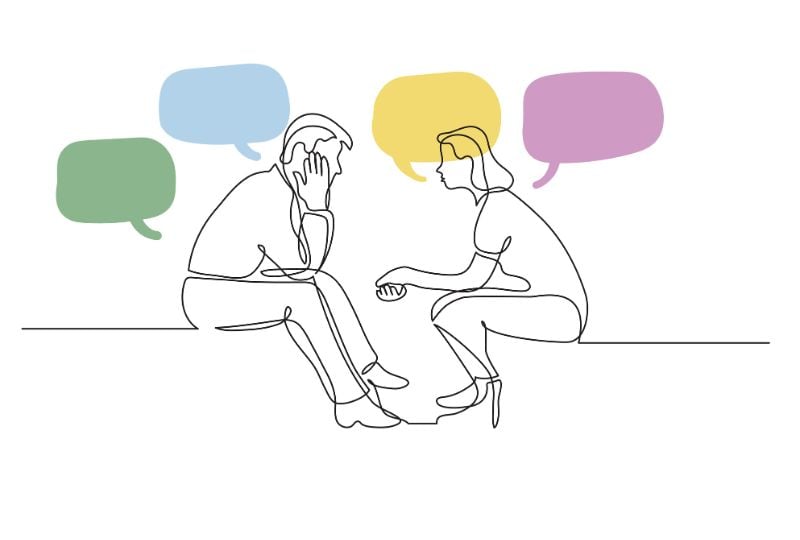
Talking about traumatic experiences is difficult for many survivors. Trauma disclosure, the process of sharing thoughts and feelings about a traumatic event, can play a vital role in the recovery from and reduction of posttraumatic stress disorder (PTSD) symptoms. Despite the clinical importance of trauma disclosure behavior, there is still much we do not understand about how, when, or why survivors choose to share their stories. Although the existing literature provides a meaningful starting point, crucial gaps remain. Because prior research has found that trauma survivors are much more likely to disclose to informal support sources (e.g., friend, family member, romantic partner) than to formal sources (e.g., therapists, doctors, or law enforcement officials), the current study focused on informal disclosure.
Most Survivors Turn to Close Loved Ones First
Notable patterns emerged regarding to whom survivors disclosed. Romantic partners were common confidants, with disclosure rates ranging from 9% to 69%. Friends were also frequent recipients, with 17% to 96% of survivors sharing their experiences with at least one friend at some point. In family contexts, survivors were more likely to confide in their mothers than fathers. Additionally, survivors tended to disclose to others who shared similar identities or lived experiences, perhaps because survivors believed these individuals could empathize with their experience.
The Timeline of First Disclosure is Highly Individual and Unpredictable
One of the most striking findings was the wide range in timing for when survivors first disclosed. While some survivors shared within the same day of the traumatic event, others waited years and, in some cases, nearly two decades before telling anyone. There was no single “normal” or universal timeline, suggesting that disclosure is a deeply individual process, likely shaped by a complex interplay of psychological, relational, and contextual factors.
The extent of disclosure was also variable, although many studies did not assess for the amount of detail shared. In research that assessed this aspect of disclosure, survivors largely reported that they revealed only minimal details. Comprehensive accounts of trauma or its impact were rare.
Why Survivors Choose to Disclose or Stay Silent
Survivors described a variety of motivations for disclosure. Common motivations included seeking emotional support, feeling less alone, and processing the emotional impact of the trauma. Some survivors disclosed in order to access practical resources such as medical or mental health services. For some, opening up was a way to help loved ones understand changes in their behavior, recognizing that the effects of trauma extended into their relationships.
The barriers to disclosure were equally varied. A frequent concern was the fear of being a burden on others. This led many survivors to engage in “protective buffering,” wherein survivors withheld information to shield loved ones from emotional distress, even when doing so impacted the survivor’s own wellbeing. Another significant barrier was the fear of not being believed or worry that what was shared could be used against them. Cultural factors shaped disclosure decisions as well, with some communities carrying norms around privacy, stoicism, or stigma that made disclosure feel risky or socially unacceptable. Feelings of shame, embarrassment, and avoidance further compounded these challenges, making silence seem like a protective strategy at the time.
What We Still Don’t Know and Why It Matters
Understanding trauma disclosure behavior is not merely an academic endeavor; it has direct implications for how we support survivors in clinical practice, research settings, and in daily life. Given that most survivors turned first to friends and family, these informal supports play a critical role following trauma. Awareness that survivors may disclose only minimally, may worry about being a burden, and that disclosure timing is unpredictable can make a difference in how we respond and offer support. Healing is rarely a solitary process, and for many survivors, feeling truly heard even by one person can be the first step toward recovery.
Despite these findings, there are still significant gaps. The majority of studies reviewed were cross-sectional, capturing a single snapshot in time rather than following survivors over time. This limits our ability to understand how disclosure behaviors evolve or the long-term trajectories of recovery following disclosure. Also, greater diversity in studies is needed to understand how cultural, demographic, and contextual factors shape disclosure patterns across different populations. Finally, most studies only asked one or two questions about disclosure, such as a yes or no “Have you ever told anyone about this experience” question, which severely limits our ability to understand nuances related to disclosure behavior.
Clinicians can play a role in this process by assessing the quality of a client’s informal support system, addressing concerns related to disclosure, and integrating disclosure patterns into case conceptualization and treatment planning. For researchers, given that studies had varying results, particularly with different ways of measuring trauma disclosure behaviors, there is a need for more systematic studies that assess disclosure over time. Advancing our understanding of trauma disclosure is essential for strengthening support systems and developing interventions that more effectively meet survivors’ needs.
References
Barden, E. P., Fernando, M., Fredman, S. J., & Thompson-Hollands, J. (2026). A systematic review of trauma disclosure behaviors to informal support sources. Clinical Psychology: Science and Practice. Advance online publication. https://doi.org/10.1037/cps0000374
Discussion Questions:
1) Since survivors are more likely to disclose trauma to friends and family than to formal sources like therapists or law enforcement, what role should psychologists play in providing psychoeducation and awareness to prepare informal supports to respond effectively to trauma disclosure?
2) Survivors tended to disclose to others with shared identities or experiences. What does this suggest about peer support models and group therapy for trauma populations? Where might those approaches have limits?
3) The majority of studies reviewed were cross-sectional. What are the most pressing longitudinal questions we still need to answer about how disclosure behaviors evolve over time and shape recovery trajectories?
4) Disclosure rates across studies ranged greatly from 25% to nearly 98%. What factors do you think account for that variance, and how should future studies work toward more standardized measurement?
5) Cultural norms around stigma, privacy, and strength were identified as barriers to disclosure. How can researchers design studies that capture these nuances across diverse populations?
6) What are some important next steps in connecting trauma disclosure behavior research to treatment outcome data?
About the Author(s)
Eileen Barden, PhD: Dr. Barden is a psychologist at the VA Boston Healthcare System and an Assistant Professor of Psychiatry at the Boston University Chobanian & Avedisian School of Medicine.
Michelle Fernando, PhD: Dr. Fernando is a psychologist at the VA Boston Healthcare System, an Affiliated Investigator at the National Center for PTSD Behavioral Science Division, and an Assistant Professor at the Boston University Chobanian & Avedisian School of Medicine.
Steffany Fredman, PhD: Dr. Fredman a Professor of Human Development and Family Studies and Psychology at The Pennsylvania State University and the co-developer of Cognitive-Behavioral Conjoint Therapy for PTSD.
Johanna Thompson-Hollands, PhD: Dr. Thompson-Hollands is a staff psychologist at the National Center for PSTD Behavioral Science Division at VA Boston Healthcare System and an Associate Professor of Psychiatry at the Boston University Chobanian & Avedisian School of Medicine.